

Curly hair has opinions. Loud, inconvenient, completely unscheduled opinions are usually expressed twenty minutes before you need to leave the house.
And here’s what nobody tells you: half the time, it isn’t your hair acting up. It’s your formula, ignoring the weather entirely.
The same curls that sat beautifully in February turn unhinged and enormous once June arrives. Or shrivel into tight, snapping coils the moment the air dries out. People blame genetics, or technique, or that one disastrous DIY protein treatment. Rarely do they question whether their shampoo makes any sense for the climate they’re actually living in.
The right shampoo for curly hair isn’t a permanent discovery. It’s a seasonal one.
Table of Contents
Your Climate Is Having a Whole Conversation With Your Curls
The cuticle, the outermost layer of the hair shaft, doesn’t lie flat on curly hair the way it does on straight hair. It’s slightly lifted. Always. Which means curly hair is naturally more porous, more reactive, and considerably more opinionated about what the surrounding air is doing at any given moment.
Humid air gets pulled straight into that open cuticle. The shaft swells. Curl pattern either loosens dramatically or frizzes into something unrecognisable, depending on porosity. Any definition you styled in? Gone within the hour.
Dry air does the opposite, pulling moisture out of the shaft continuously until curls feel brittle, tight, and snap when handled. Neither situation is a hair problem. Both are what happens when a top shampoo for curly hair completely ignores the environment it’s being used in. Running the same formula in coastal Chennai during monsoon and Delhi in January is a bit like using the same settings on two completely different machines and wondering why one keeps breaking.
What Humid Climates Actually Demand From a Formula
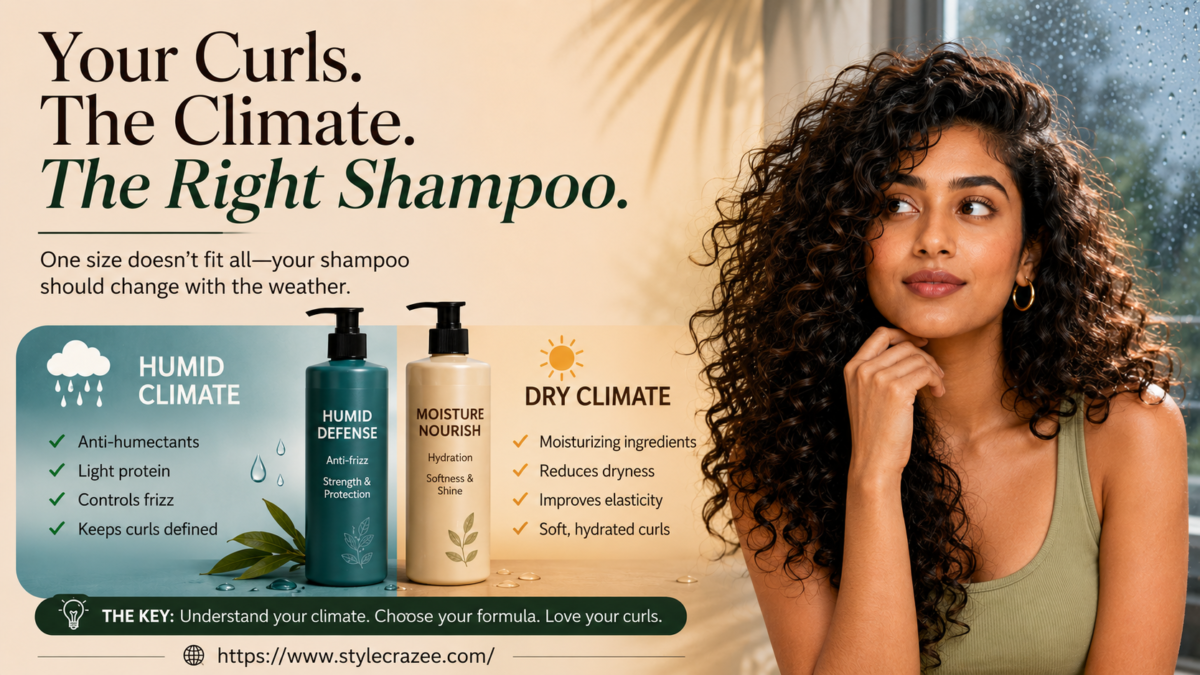
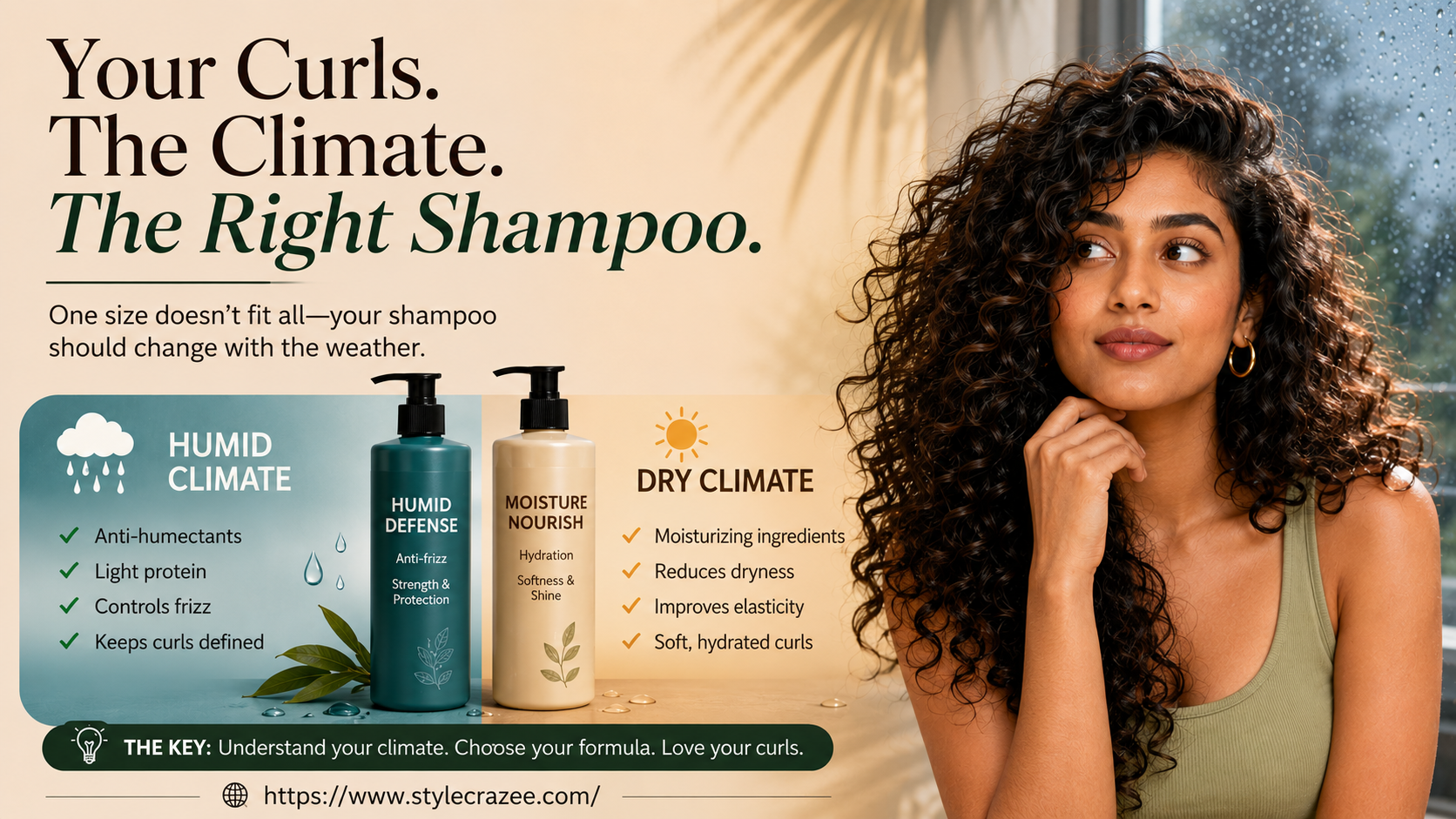
Above roughly 70% humidity, which covers most of coastal India for a significant chunk of the year, the job description for your shampoo changes entirely. Hair is already collecting water from the air. It doesn’t need more moisture. It needs structure and resistance.
Anti-humectants constitute the least known and most essential class of ingredients. Dimethicone forms a thin layer around the hair strand and minimizes unregulated water uptake without rendering it waterproof, merely offering sufficient opposition so that the hair strand does not swell up whenever humidity rises. Hydrolyzed keratin strengthens the cuticle and makes it less reactive to environmental moisture content.
Glycerin recommended endlessly in general curl advice is genuinely counterproductive here. It draws water from the surrounding air directly into the hair. In humidity, that’s the last thing a shampoo for curly hair should be doing.
When the Air Dries Out, Everything Flips
Winter. Air conditioning. High altitude. Central heating. All create the same problem, air that pulls moisture from the hair shaft and doesn’t return it.
Curls in dry conditions need everything humid-climate curls don’t. Glycerin becomes genuinely useful, drawing whatever ambient moisture exists into the cortex. Shea butter, castor oil, and avocado oil are heavier emollients that coat the shaft and slow moisture loss. These are what a shampoo for curly hair needs through a dry season, not the lightweight protein-forward formulas that performed brilliantly in July.
One thing worth watching excess protein on dry, brittle curls creates hardness. Hair feels stiff, loses elasticity, and snaps more easily. Pull back on protein-heavy formulas when the air is dry, and hair is already struggling.
Your Hair Is Telling You What It Needs
Before the next shampoo purchase, look at what your hair is actually doing right now. Not six months ago. Today.
Frizzing, swelling, and losing definition due to mid-morning humidity are the causes. The shampoo for curly hair you need has anti-humectants, light protein, and minimal glycerin. Dry, snapping, tight coils that lack any spring moisture loss are the cause. The formula needs emollients, glycerin, and considerably less protein.
Porosity matters. The curl community is right to talk about it constantly. But porosity without climate is half a conversation. High-porosity curls in Mumbai in August behave nothing like the same hair type in Jaipur in December. Treating them identically is why so many people conclude their hair is simply impossible.
Conclusion
There isn’t one perfect shampoo for curly hair. There’s the right one for where you are, what season it is, and what the air outside is doing to your hair shaft right now.
Once you start reading climate as an ingredient requirement rather than background noise, something shifts. Frizz becomes manageable. The definition lasts past noon. Products stop mysteriously stopping.
Your curls weren’t being difficult. They were waiting for a formula that understood the weather.